
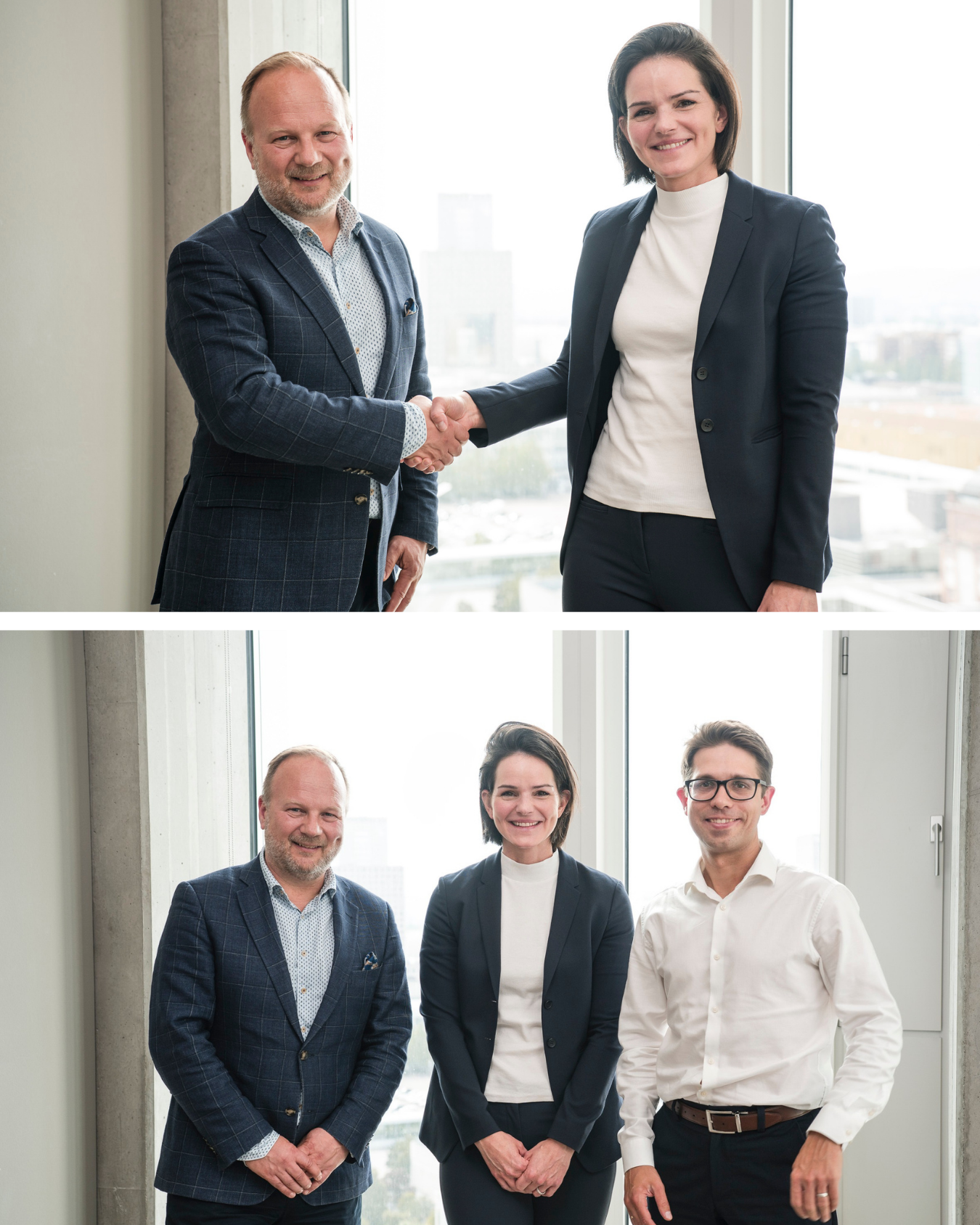
In Frankfurt, Lana Jansen, CEO and Co-Founder of WePlan, and Martin Hoffmann, CEO and Co-Founder of VeeOne, came together to talk about their partnership and how they want to innovate manpower planning together.
Led by Igor Fedenko, Crew Planner at VeeOne and interviewer for this conversation, the discussion explores how modern workforce planning software, consulting expertise and process assessment can work together to improve manpower planning for airlines, rail operators and other complex workforce environments.
At the center of the conversation is a practical question: why are so many organizations still trying to manage critical manpower planning with Excel and fragmented processes, even though planning complexity has increased dramatically? Lana and Martin discuss where spreadsheets reach their limits, why scenario-based planning matters, what companies should expect from a Planning Process Assessment, and why combining the right software with the right expertise creates better planning outcomes.
Ready to improve your manpower planning process?
If your organization is still relying on Excel, limited scenario analysis or fragmented workforce planning workflows, this interview is a useful place to start. Explore how WePlan supports modern manpower planning. Talk to us about better planning for aviation, rail or complex workforce operations.
Watch the full interview!

.png)

WePlan x VeeOne Interview: Modern Manpower Planning for Airlines and Rail
Manpower planning has become too important to be handled with disconnected files, limited scenario capability and planning logic that depends on a few individuals. In industries such as aviation, rail and ground operations, workforce planning decisions influence cost, staffing stability, operational resilience and long-term performance.
In this interview, WePlan and VeeOne explain why many organizations still struggle with outdated planning approaches, what makes modern manpower planning solution different, and how a structured Planning Process Assessment can help identify inefficiencies, validate improvement opportunities and create a stronger basis for implementation.
The conversation also highlights the value of the WePlan x VeeOne partnership: combining software for scenario-driven manpower planning with consulting expertise that helps organizations understand, assess and improve the planning process end to end.
What This Interview Covers
- Why Excel is no longer enough for modern manpower planning
- The biggest workforce planning challenges in airlines and rail
- How fragmented processes create downstream operational problems
- Why scenario analysis is essential for long-term staffing decisions
- What a Planning Process Assessment actually includes
- How WePlan and VeeOne combine tool + expertise into a stronger offer
- Why rail workforce planning is an important growth area for modern planning tools
Key Takeaways
1. Excel is useful, but it is not a modern manpower planning system
Excel remains a familiar tool in many organizations, but it struggles when manpower planning requires collaboration across teams, large data volumes, scenario simulations and constant adjustment of constraints such as training, absences, qualifications, vacation and part-time models.
2. Better planning depends on the full process
Manpower planning does not happen in isolation. Early assumptions affect downstream steps such as pairing, rostering, tracking and execution. If the planning logic is weak at the beginning, the cost often appears later in operations.
3. Process assessment should be backed by data
A useful assessment does not stop at interviews or opinions. It should validate planning issues with analytics, scenario testing and operational evidence, so companies can understand where the real inefficiencies are and what return on investment improvement could create.
4. Airlines and rail operators face similar complexity
Although aviation and rail have sector-specific differences, both deal with large workforces, operational dependencies and long-term planning decisions. That makes both sectors strong candidates for better manpower planning methods and fit-for-purpose tools.
5. The partnership is built around a clear idea
WePlan brings modern workforce planning solution, analytics and scenario capability. VeeOne brings consulting expertise, process knowledge and assessment experience. Together, the two companies want to help clients modernize manpower planning in a more structured and measurable way.
Featured Quote
“Better manpower planning is not only about having a tool. It is about understanding the full process, validating issues with data and making better decisions earlier.”
Why Better Planning Matters
For many planning teams, the real issue is not only that the current tool is outdated. The issue is that the entire planning setup has evolved over time without enough transparency, structure or scenario capability.
That becomes risky when organizations need to:
- plan workforce demand more accurately
- understand the cost of planning decisions
- compare multiple staffing scenarios
- react faster to operational or market changes
- reduce dependency on fragile spreadsheet-based processes
- build a more resilient workforce planning model
This is where the combination of manpower planning solution and planning process consulting becomes especially valuable.
About The Partnership
The WePlan x VeeOne partnership is based on a simple idea: better planning results come from combining the right technology with the right expertise.
WePlan focuses on modern manpower planning solution that helps organizations create scenarios faster, improve transparency and move beyond legacy planning methods. VeeOne contributes deep industry knowledge, consulting capability and a process-led perspective on how planning works across the organization. Together, they want to support companies that are looking for a more effective way to manage manpower planning in aviation, rail and other complex operations.
FAQ Section
What is manpower planning?
Manpower planning is the process of forecasting, structuring and optimizing workforce supply against operational demand. In industries such as airlines and rail, it includes long-term staffing scenarios, qualification requirements, absences, training demand and other operational constraints.
Why is Excel not enough for workforce planning?
Excel can be useful for many tasks, but it is limited when workforce planning becomes more complex. It is not built for large-scale collaboration, fast scenario modeling, auditability or integrated manpower planning across multiple constraints and teams.
What is a Planning Process Assessment?
A Planning Process Assessment is a structured review of how manpower planning works today. It helps organizations identify process gaps, inefficiencies, data issues and opportunities to improve planning quality, transparency and return on investment (ROI).
What is the WePlan x VeeOne partnership about?
The partnership brings together WePlan’s manpower planning solution and VeeOne’s consulting expertise. The goal is to help airlines, rail operators and other organizations improve workforce planning through better tools, stronger processes and clearer decision-making.
Who is featured in this interview?
The interview features Lana Jansen, CEO and Co-Founder of WePlan, and Martin Hoffmann, CEO and Co-Founder of VeeOne. The conversation is led by Igor Fedenko, Crew Planner at VeeOne.
Read The Full Interview
Igor: We are very glad to be here in Frankfurt together with you. I want to introduce our speakers today. We have Lana Jansen, CEO and Co-Founder of WePlan, and Martin Hoffmann, CEO and Co-Founder of VeeOne. Together, they form a strong team in crew planning.
Martin: Thank you.
Lana: Thank you. Welcome to Frankfurt.
Igor: We want to talk about airline markets. Many airlines struggle with manpower planning. What is the biggest pain point you see?
Martin: One of the main issues is that resource planners often keep working the way they always have, even when better system support is available. Airlines also invest too little in long-term resource planning, even though it makes a major difference over time. As cost pressure increases, they will need to get much more out of their labor resources and recruitment.
Lana: I agree. That is one reason we founded WePlan. We saw a lack of modern tools. Many airlines lost experienced staff and are now trying to manage complex planning in outdated Excel files or limited legacy solutions.
Igor: Why is Excel not enough for efficient crew planning?
Lana: Excel is a great tool, and I use it every day. But it has clear limits. It becomes difficult when many people work in one file, when data volumes grow, and when you need to run scenario simulations quickly. In a thin-margin, fuel-driven business, planners need to re-optimize constraints like training, part-time models, vacation and absences very quickly. That is hard to do in Excel.
Martin: It is also about managing the many data sources that feed the process. At some point, the file becomes too complex, sometimes unstable, and people stop being fully confident that the figures are correct.
Igor: So, Lana, do you believe you have built the right solution?
Lana: Of course. Since founding the company, we have worked to build the best manpower planning tool we could because we did not see a good one in the market.
Igor: If I am responsible for crew planning and struggling, what would VeeOne do first?
Martin: We would look at the whole crew planning process, especially on the manpower side. We would identify pain points, weaknesses and improvement potential across three areas: process, system and knowledge. Are teams using their current tools fully? Do they need training? Where can they work more effectively?
Lana: I would add analytics. It is important to validate the issues with data and understand where productivity hurdles, planning gaps and deviations from reality actually come from.
Igor: Are some markets harder to enter than others?
Lana: Yes. North America is harder for us for cultural and structural reasons. We have grown faster in the Middle East and Asia, where companies are often highly focused on process improvement, auditability, standardization and ROI.
Martin: I agree. Different regions work differently. It is not that we avoid those markets, but we do need to adapt.
Lana: And it also depends on the segment. In America, we have had more success in ground and non-flying operations than in flight operations.
Igor: What about rail?
Lana: We plan to enter every market that needs strong manpower planning, so yes, rail is clearly part of that.
Martin: We already work with railway companies, and the need is clear. These are very large organizations managing thousands of resources every day. In many cases, planning maturity is still behind aviation, which makes the opportunity even more obvious.
Igor: How similar is rail planning to airline planning?
Martin: Quite similar overall. There are some differences, such as infrastructure disruptions and deregulation in some countries, but many of the core planning questions are comparable.
Lana: We want to become the number one manpower planning provider in rail just as we do in airlines.
Igor: What is a Planning Process Assessment?
Lana: From our perspective, it is partly a product and partly consulting. In tight-margin times, companies need cost control and a clear understanding of where planning inefficiencies and inaccuracies create cost. It helps identify gaps in the planning process and show where better planning can improve outcomes.
Martin: A key part is asking the right questions and speaking to the right people in the organization. The issues are often not hidden. But you need the right process and experience to uncover them clearly and recommend solutions.
Igor: What are the most common issues you see?
Martin: One of the biggest is that teams understand only their own part of the process. But manpower planning, pairing, rostering and tracking all affect each other. If the plan is weak at the start, execution will suffer later.
Lana: And from a manpower planning perspective, it is often hard to identify the exact cost of wrong or suboptimal decisions because there is a long time between planning and real operations. A lot happens in between, and few organizations document why a specific planning decision was taken, what the alternatives were, and what trade-offs were involved.
Martin: Scenario analysis is also critical. Whether you are introducing a new fleet, changing capacity, or expanding in rail, these decisions need to be modeled early. Otherwise, companies realize too late that they have too many or too few people.
Igor: What deliverables should companies expect after an assessment?
Lana: A solid report showing cost, opportunity cost, ROI, when the benefits could materialize, and what measures are needed in implementation. Another important deliverable is proof: interviews, data validation, scenario analysis and simulation on real client data.
Martin: We have seen the value of these assessments many times. The return on investment becomes visible once recommendations are implemented.
Lana: On our side, we often prove ROI with data in the proof-of-concept phase. But we do not always go deeply into the process behind the Excel setup. That is why collaboration with VeeOne is exciting. If process assessment happens earlier, implementation and change management become much easier.
Igor: If you had to describe the partnership in one sentence, what makes it unique?
Martin: We are stronger together. Together we bring a stronger product and a stronger overall offer to the market.
Lana: It is about improving not only our clients’ processes, but also ourselves, our services and how we work together.
Igor: What does each of you bring that others do not?
Lana: We bring the tool and the ability to use analytics and planning capabilities in a practical way.
Martin: We bring experience and knowledge, but we were missing the tool. That is why the combination works so well.
Igor: What can you bring to rail that is not already there?
Lana: An outside perspective and a view of what best-in-class manpower planning can look like.
Martin: In many cases, railway companies do not yet have something truly fit for purpose. That creates a strong opportunity for a modern solution.
Igor: Can you also fill this gap in the airline market?
Lana: Yes. After seeing many ways of doing manpower planning, we have developed a best-practice approach. The tool gives clients flexibility, but it also gives direction.
Martin: Airlines often think they are more unique than they really are. Standardization can be hard, especially when organizations depend on one person and one Excel file that no one wants to touch. But simplifying this and making implementation faster is one of the biggest opportunities ahead.
Igor: Looking ahead, what does a successful partnership look like in two or three years?
Lana: Jointly implemented solutions for airlines, rail operators and other sectors that need manpower planning.
Martin: We want to become the place people go when they want to improve manpower planning, especially railway companies and smaller airlines.
Lana: And for me, it is also about continuous improvement and learning from each other.
Igor: Thank you both very much.
Lana: Thank you.
Martin: Thank you.